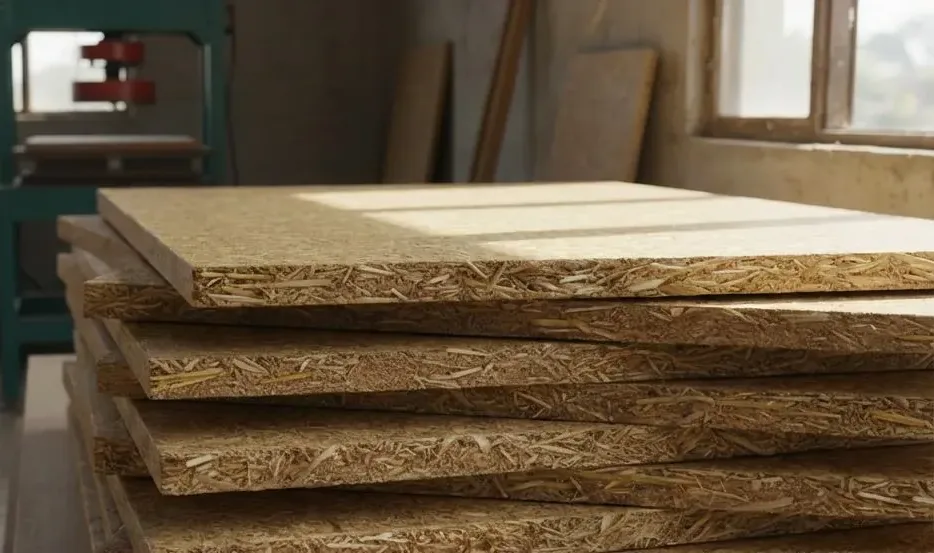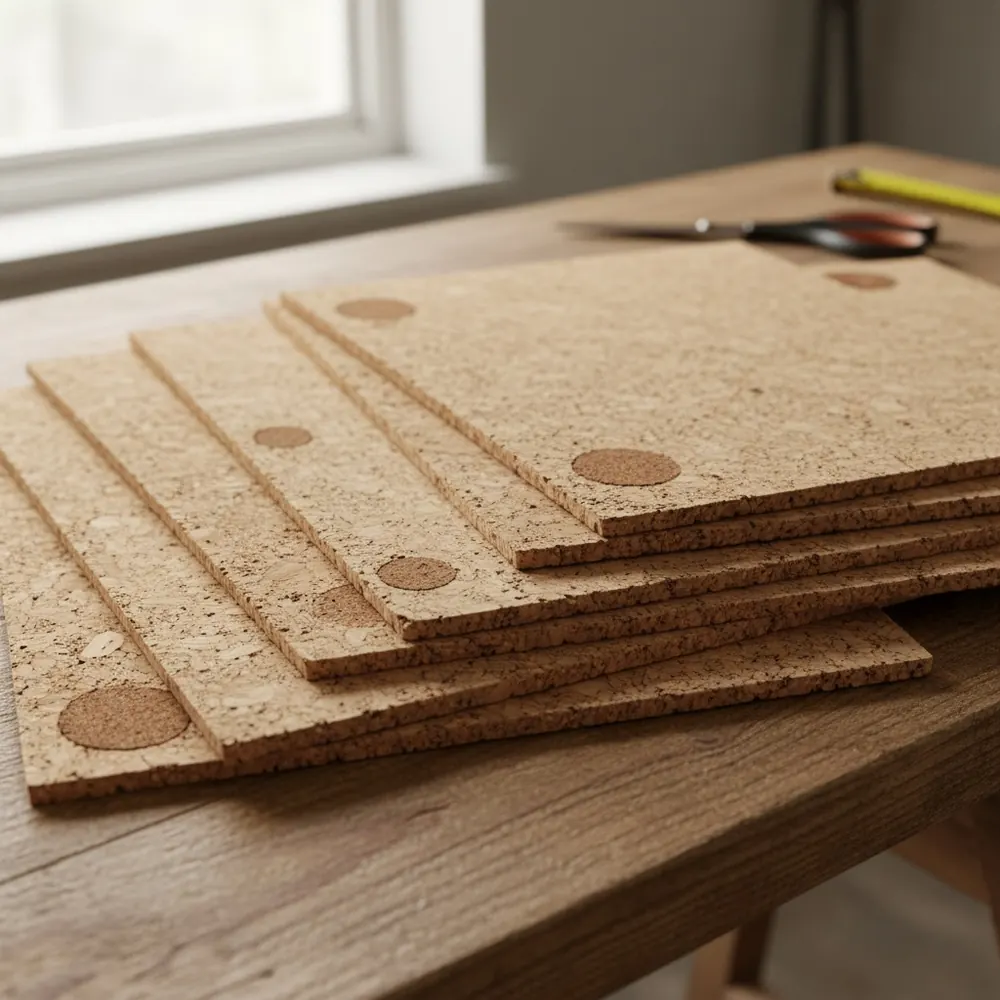
Medium-density fibreboard (MDF), particle board and HDHMR are made by pressing wood fibres or chips together with resin glue. In most boards that glue is urea-formaldehyde or phenol-formaldehyde. It's cheap, strong and everywhere: wardrobes, kitchen carcasses, TV units, beds and false ceilings.
Why formaldehyde matters
Formaldehyde is a gas at room temperature, and boards made with formaldehyde resins can release it into the room, especially when they're new, warm or in humid air. The US EPA lists pressed-wood products among the main indoor sources and notes it can irritate the eyes, nose and throat. The International Agency for Research on Cancer classifies formaldehyde as carcinogenic to humans (Group 1).
Laminate on the surface slows emissions, but edges, holes and the backs of panels are often left raw.
What to use instead
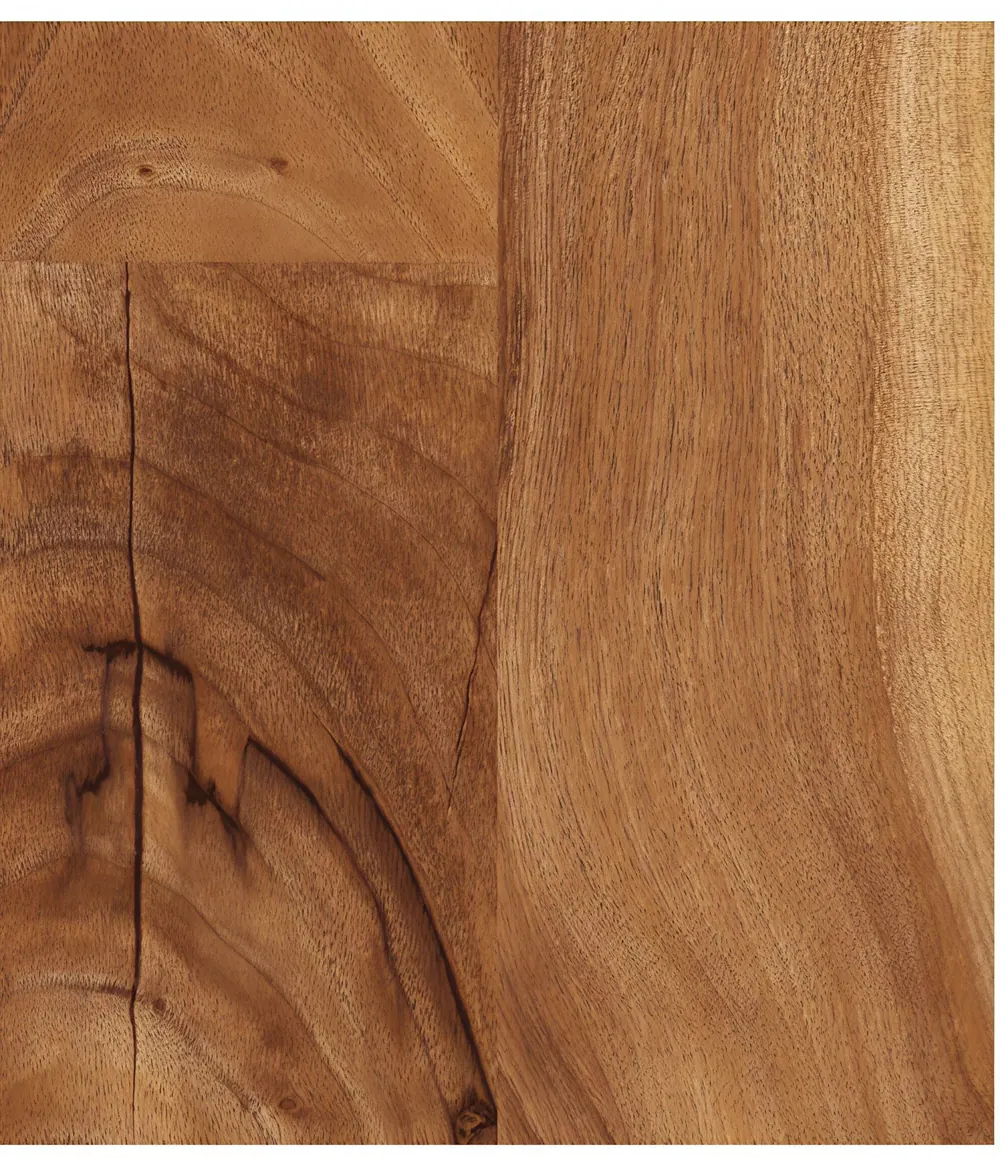
- Solid wood finished with plant oils, where your budget allows.
- AgriBioPanel, a board pressed from wheat straw and paddy residue with zero added formaldehyde. It's A+ rated for VOC emissions (ISO 16000-6), holds 50 kg per screw point, is fire rated for two hours and is termite-proof. It's priced close to good-quality MDF.
- Plant-oil finishes instead of PU or melamine polish, so you don't add a second chemical layer on top.
Where AgriBioPanel isn't the right choice
We don't recommend it for wet zones: under sinks, in washrooms or for planters. For those, use solid wood or a different substrate, and we'll help you choose.
Building furniture this year? Send us your carpenter's cut list and we'll price it in AgriBioPanel.
Tell us about your home. We'll suggest the right materials and send a quote, free.